Our Gas Handling Solutions
Reliable systems for storage, distribution, and management of industrial gases
Pressure Vessels
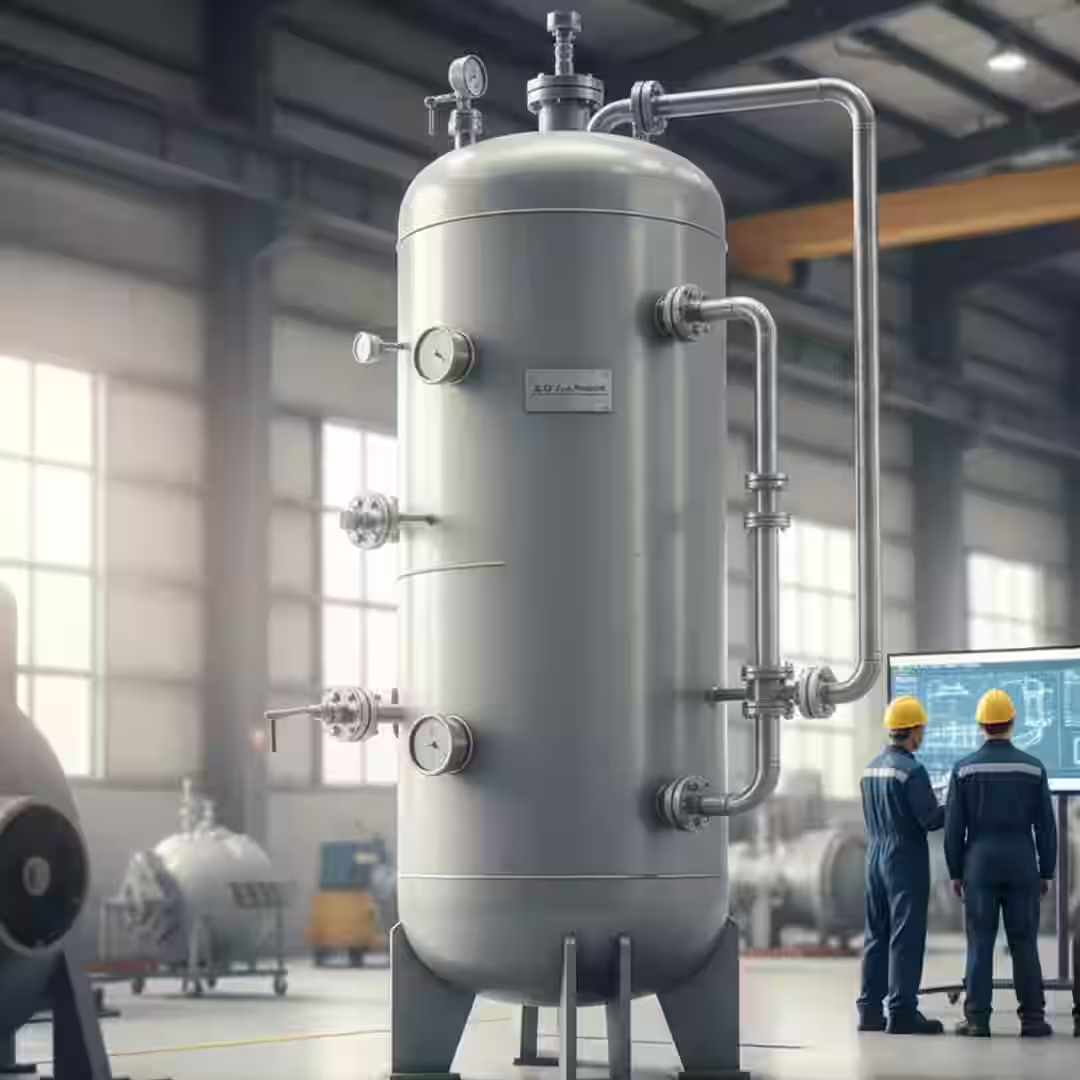
High-quality pressure vessels designed for storage and processing of compressed air, gases, and liquids. Manufactured to international standards for maximum safety and reliability in industrial applications.
Specifications
- Capacity: 50 - 10,000 liters
- Pressure: 10 - 150 bar
- Materials: Carbon Steel, SS304, SS316
- Design Codes: ASME, IBR, PED
- Temperature: -20°C to 300°C
- Certifications: ISO 9001, CE, CRN
Applications
Key Features
- Radiographic testing for weld integrity
- Hot dip galvanized or painted finish
- ASME flanges and connections
- Pressure relief valves and gauges
- Drain valves and inspection openings
- Custom mounting brackets and supports
Technical Specifications
| Model Series | Capacity (Liters) | Working Pressure | Dimensions (mm) | Material | Weight (kg) |
|---|---|---|---|---|---|
| PV-100 Series | 100 - 500 | 10 - 30 bar | 300-600Ø x 800-2000L | Carbon Steel | 25 - 120 |
| PV-500 Series | 500 - 2,000 | 10 - 50 bar | 600-1000Ø x 1500-3000L | Carbon Steel/SS304 | 120 - 450 |
| PV-2000 Series | 2,000 - 5,000 | 10 - 100 bar | 1000-1500Ø x 2500-4000L | Carbon Steel | 450 - 1,200 |
| PV-5000 Series | 5,000 - 10,000 | 10 - 150 bar | 1500-2000Ø x 3000-5000L | Carbon Steel | 1,200 - 2,500 |
| SS-PV Series | 50 - 2,000 | 10 - 100 bar | 200-1000Ø x 500-3000L | SS304/SS316 | 15 - 400 |
Standard Features:
- ASME/IBR design and certification
- Pressure relief valve (PRV) as per standard
- Pressure gauge with isolation valve
- Drain valve at lowest point
- Inspection manhole (for vessels > 500L)
- Lifting lugs or brackets
Optional Features:
- Leg supports or saddle supports
- Hot dip galvanized finish
- Epoxy/polyurethane paint coating
- Additional nozzle connections
- Level indicators
- Temperature sensors
- Insulation cladding
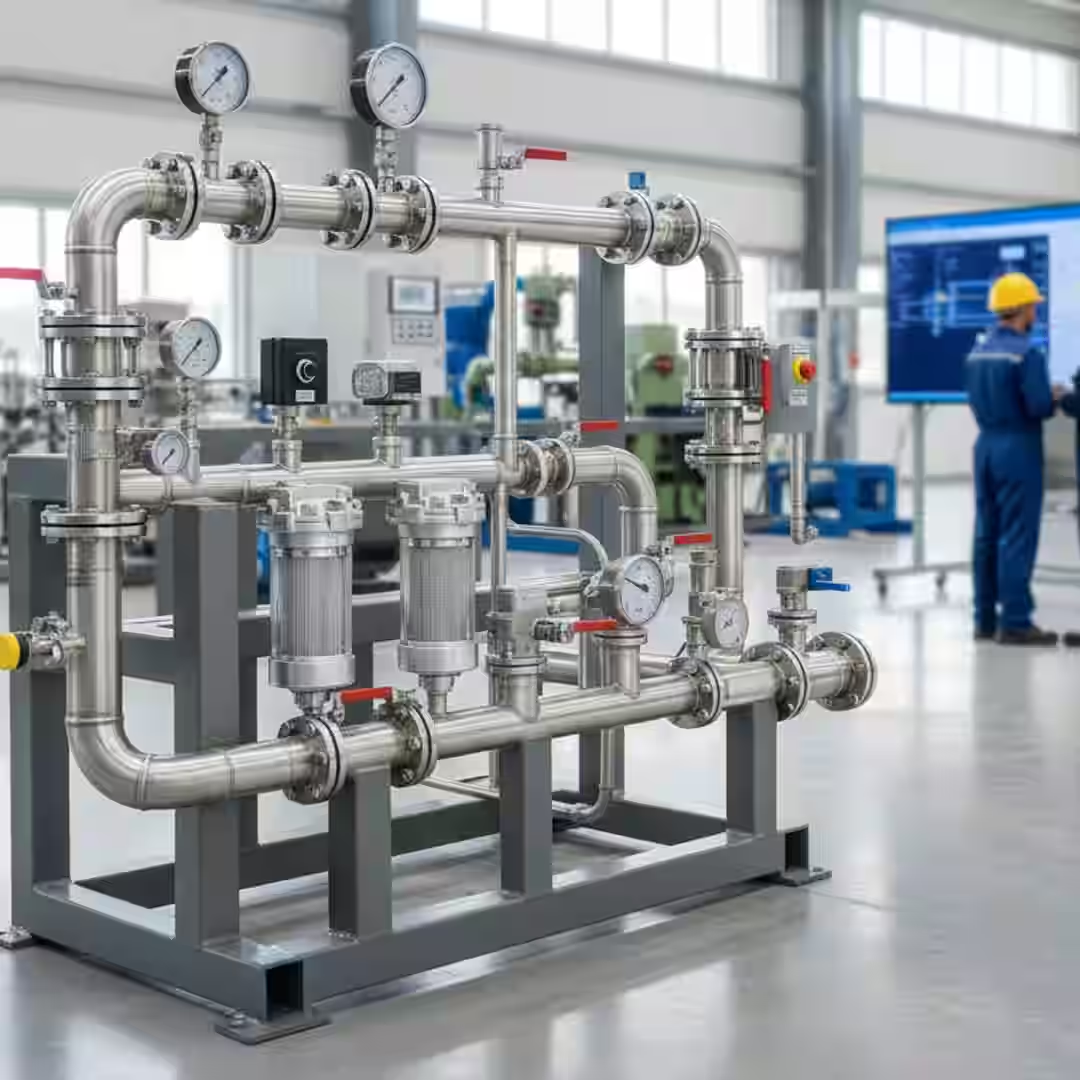
Gas Pipe Trains / Stations
Complete gas distribution and control stations designed for safe and efficient delivery of industrial gases from source to point of use. Custom-configured systems include filtration, regulation, measurement, and safety components.
Specifications
- Pressure Range: Vacuum to 300 bar
- Flow Capacity: 1 - 10,000 Nm³/hr
- Pipe Size: ½" to 12" NB
- Materials: SS316, CS, Brass
- Filtration: 0.01 - 100 micron
- Control: Manual/Pneumatic/PLC
Applications
Key Features
- Modular design for easy expansion
- Integrated filtration and purification
- Precise pressure regulation and control
- Flow measurement and totalization
- Safety shut-off and relief systems
- Automatic changeover systems
- Remote monitoring capabilities
Technical Specifications
| System Type | Max Pressure | Flow Capacity | Pipe Size | Control Type | Typical Components |
|---|---|---|---|---|---|
| Basic Distribution Station | 10 bar | 10-100 Nm³/hr | 1" - 2" | Manual | Isolation valves, pressure regulator, gauge |
| Medium Pressure Station | 40 bar | 50-500 Nm³/hr | 2" - 4" | Pneumatic | Filters, regulators, relief valves, gauges |
| High Pressure Station | 150 bar | 100-2000 Nm³/hr | 3" - 6" | PLC Controlled | Multi-stage regulators, flow meters, safety systems |
| Ultra High Pressure Station | 300 bar | 10-500 Nm³/hr | ½" - 2" | PLC with HMI | Specialty valves, rupture discs, instrumentation |
| Gas Mixing Station | 10 bar | 1-100 Nm³/hr | ½" - 1½" | PLC/Manual | Mass flow controllers, analyzers, blending panel |
| Automatic Changeover | 20 bar | 5-200 Nm³/hr | 1" - 3" | Automatic | Dual manifolds, sensors, solenoid valves |
Standard Components:
- Ball valves or needle valves for isolation
- Pressure regulators (single or multi-stage)
- Pressure gauges with snubbers
- Particulate filters (1-40 micron)
- Pressure relief valves or rupture discs
- Flow meters (rotameter or electronic)
- Check valves for backflow prevention
Optional/Special Components:
- Coalescing filters for oil/water removal
- Activated carbon filters for odor/contaminants
- Gas analyzers (O₂, moisture, purity)
- Mass flow controllers for precise control
- Automatic shut-off valves with sensors
- Data logging and remote monitoring
- Heated enclosures for cold environments
- Explosion-proof components for hazardous areas
Design Standards & Certifications:
- ASME B31.3 Process Piping
- ISO 14122 Safety of machinery
- ATEX/IECEx for hazardous areas
- PED 2014/68/EU
- ISO 9001 Quality Management
- CE Marking